






Join Amazon Prime for exclusive deals, fast shipping, and endless entertainment! Sign up now!
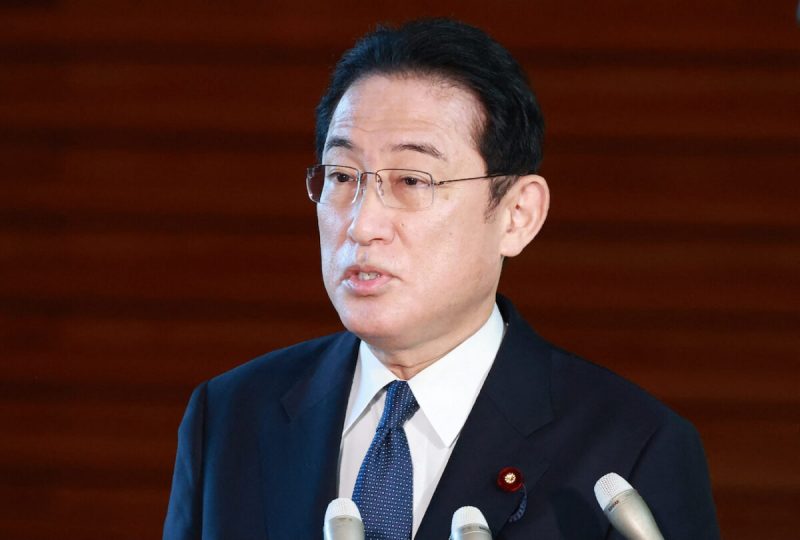
Japanese Prime Minister Fumio Kishida visited India on March 19 amidst concerns about India’s disparate positions on Russia.
Kishida is expected to discuss the Russia-Ukraine dilemma with Indian Prime Minister Narendra Modi, as well as exactly how the event impacts the protection setting in the Indo-Pacific as the area deals with placing risks from the Chinese regimen, according to professionals.
India is among the few significant countries that has actually not condemned Russia for its illegal invasion of Ukraine, taking a neutral diplomatic stance on the matter. Experts say this position is due partly to New Dehli’s demand to keep ties with its major arms vendor Moscow, specifically in the middle of increasing tensions with Beijing.
“Kishida wants to persuade all countries in the Indo-Pacific to integrate their voice to deter such aggressions like China’s invasion against Taiwan. That is why he is trying to persuade India to criticize Russia’s aggression in Ukraine,” Satoru Nagao, a non-resident fellow at the Washington-based Hudson Institute told The Epoch Times in an email.
“India can share the same feeling because China can invade India, he believes,” said Tokyo-based Nagao.
Harsh V. Pant, head of the Strategic Studies Programme at New Dehli-based Observer Research Foundation, stated that India is not in a setting to publicly slam Russia.
“India has a longstanding historical relationship with Russia but more important is the defense relationship,” Pant told The Epoch Times.
Nearly 70 percent of India’s protection arsenal is of Russian origin, though the nation is minimizing this by branching out with imports from the United States, Israel, France, as well as Italy. India has additionally begun native manufacturing.
Indian soldiers require to make use of Russia’s “high-end, sensitive machines” in difficult problems, according to Nagao, as well as the country’s military additionally needs to have actually continued access to fix components from Russia.
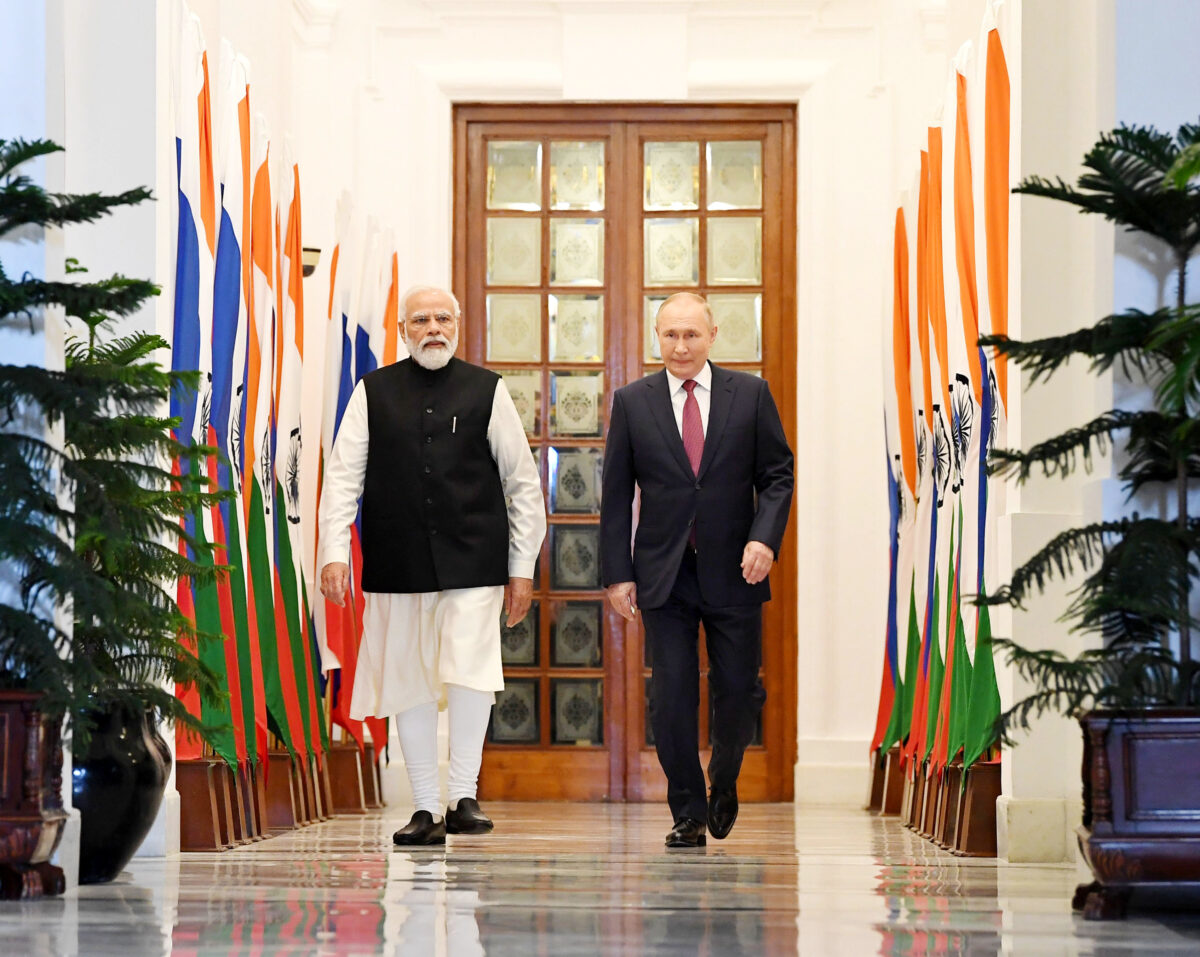
Pant stated the level of sensitivity of India’s defense dependency on Russia ought to be comprehended from the reality that while Russia is getting into Ukraine, India is encountering Chinese military build-up on its questioned border.
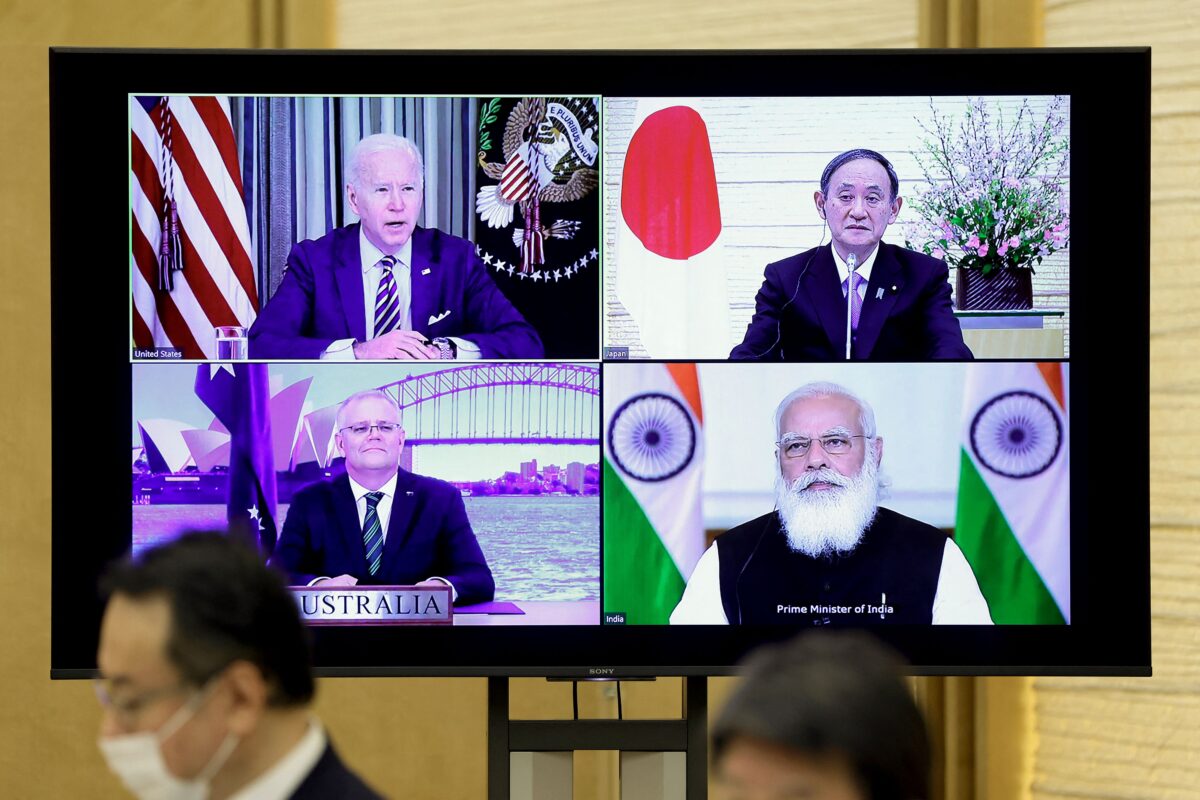
“Antagonizing Russia is something that India can’t afford. India needs both Russia and the West ironically to meet the China challenge and this is something that India has tried to convey to its partners in the QUAD,” said Pant, adding eventually a framework should develop within QUAD to address India’s concerns and realities.
Aparna Pande, director of the Hudson Institute’s Future of India as well as South Asia Initiative claimed that Japan, as well as India, have actually typically varied on issues before.
“For example when India tested nuclear weapons—but that difference has not impacted their relationship as each side understands the other’s point of view,” Pande told The Epoch Times in an email.
“PM Kishida will most likely put forth Japan’s point of view and ask for India’s support. PM Modi will most likely put forth India’s point of view and ask for Japan’s understanding,” said Pande.
The QUAD partnership stays solid therefore does the Indo-pacific method, according to Pande.
“The United States too understands India’s predicament though, like Tokyo, Washington too would like India to move away from dependence on Russia and become more closely aligned to Japan and the U.S. even in the realm of defense,” said Pande.
Kishida’s appearance will certainly allow India and Japan to speak more about the Russia-Ukraine situation as well as take a look at just how the Ukraine situation is influencing the dispute on the Indo-pacific and also the obstacles there, claimed Pant.
“That’s something that both Modi and Kashida would be interested in sharing with each other.”
Differing Concerns Of Japanese & Indian Leaders
While India and Japan share cozy ties, their differing stances in the direction of Russia might show a point of divergence.
Nagao said that Japan’s opposition to Russia’s aggression is related to its concern about China’s territorial aspirations in the Indo-Pacific. Moscow’s intrusion could encourage Beijing to make moves versus Taiwan and India.
Tokyo is additionally concerned that the war is drawing away U.S. attention as well as sources far from the Indo-Pacific.
“[I]f Russia wins the war against Ukraine, the US will need to prioritize Russian deterrence in Europe. The US could not withdraw its military forces from Europe and redeploy them to the Indo-Pacific to deter China. Japan is aware that it would face a serious situation if it had to deter Russia and China at the same time,” said Nagao.
Japan additionally shares a maritime boundary with Russia and also the 2 nations have fought a war in the past.
Russia has repetitively provoked Japan in recent times. Russian army airplanes tried to go into Japan’s territorial airspace 258 times in 2020 alone, according to Nagao.
“In 2021, five Chinese warships and five Russian warships jointly circled Japan. These incursions are evidence that Russia is a threat to Japan,” he said, adding that the United States and Australia share the same concerns about Russia.
Japan on March 18 introduced additional actions versus Russia, slapping sanctions on 15 Russian individuals consisting of protection authorities as well as 9 Russian companies including state-owned arms exporter Rosoboronexport. In the prompt after-effects of the intrusion, Japan enforced permissions on 76 Russian people, 7 financial institutions, and 12 organizations.
India’s truths, at the same time, are different. India not just shares a strategic connection with Russia however Moscow additionally sustains India’s fight versus Pakistan-sponsored terrorism, Nagao noted.
“There is a possibility that the international community will ask India to stop its military operation in Pakistan, but Russia will vote in the United Nations Security Council in favor of India. In addition, because India depended on the Soviet Union during the Cold War, their human-to-human connection is still deep and influential,” said Nagao.
While India’s break with QUAD participants on the Russia problem poses a hazard to the partnership’s communication, Nagao does not believe that it will significantly affect the team’s participation moving forward.
In the last few years, India has imported more arms from the United States, UK, Israel, and France than from Russia, and Washington D.C. has begun to sustain New Dehli in its initiatives to respond to Pakistan-sponsored terrorism.
“When India attacked terrorist camps in Pakistan in 2016 and 2019, joint statements of India-US, India-Japan, and the QUAD offered support for India’s effort to deal with terrorism,” said Nagao.
That both India and also Japan share growing challenges in Indo-Pacific need to bring both countries with each other, regardless of disagreements relative to Russia and the Ukraine battle, according to Pant.
Both countries should interact for the security of the Indo-Pacific and ensure that no “solitary nation like China” can dominate the area, he stated.
“Both India and Japan are the key pillars in the new emerging security architecture [in the Indo-Pacific] where the idea is not only to challenge China but also to provide solutions to regional problems—be it health, trade, technology, infrastructure, connectivity …which are very important but there’s a paucity of leadership,” Pant added.